
Polly is a professional, a high achiever and an addict. Her drug of choice is a grade A, top of the range smart phone. She clicks and scrolls for minutes, hours and days at a time. When Polly discovers an app that uses algorithms to create brand new music by long-dead musicians, the line between human and computer begins to blur, and the downloads become increasingly dangerous. A play about networks, nerve endings and Nirvana.
The Girl in the Machine by Stef Smith, 19, 24 & 28 Aug, Traverse Theatre, Edinburgh
(See Human Factors at The Fringe for an introduction to this post.)
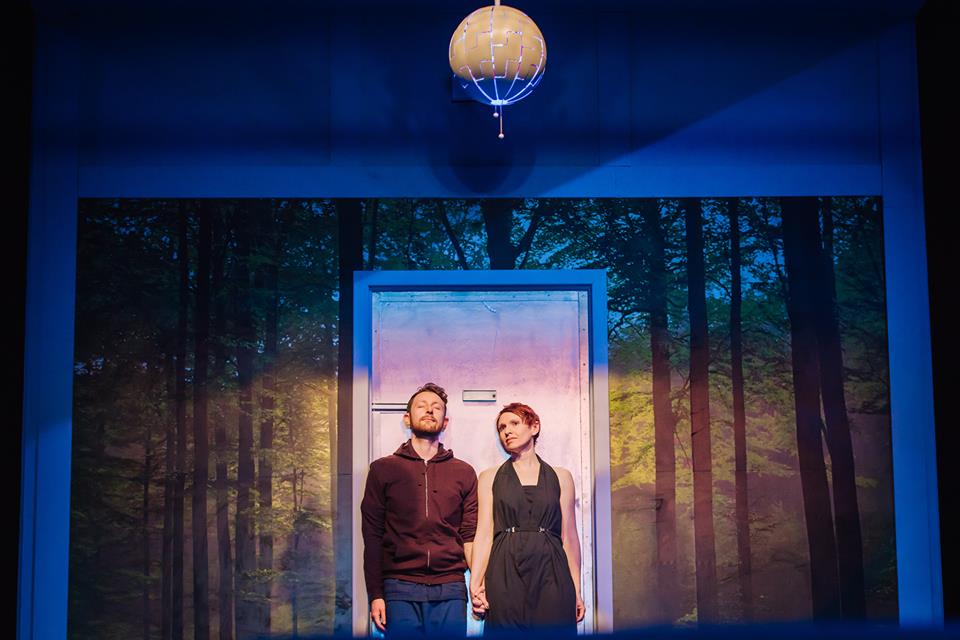
This script-in-hand, rehearsed-only-once play for early risers at Edinburgh’s Traverse Theatre was one of a series on the same theme: “Tech will tear us apart (?)” The play features a corporate IP lawyer – Polly – and her tech designer husband – Owen. Polly is addicted to her device, and will spend hours clicking and swiping through apps and the internet. Out of the blue, a new app appears that can create new music by dead artists based on aspects of their existing body of work. This is a problem, because – in her new position – it is Polly’s job to prevent and now deal with this legal quagmire.
The app is downloaded by legions of users, and it has a much darker hidden feature. The app includes an aural code via by which – it is promised – users can leave their bodies and upload their consciousness to the internet, sending messages to those on the other side. Hundreds of lives are lost as people seek to escape the stress of a hyper-connected, information-overloaded life, ironically putting their faith in everlasting life in a high-tech heaven, as pure information. Polly is blamed for the viral suicide and is sacked for failing to spot the emerging threat. She spirals into depression.
As the pair sit, Polly is consumed by her phone much like so many of us today. They grow further apart – physically and emotionally – and the phone becomes a love/hate object in the marriage. Society breaks down as attempts are made to stop the cultish phenomenon. Polly uses the last of her battery to upload her consciousness to the net, or so she thinks.
This sad but riveting play sheds light on our addition to technology while playing on our fears. It also exposes our faith in technological solutions to socio-technical and even spiritual problems. “When did life get so complicated?” Polly asks. “When we tried to make it simple”, Owen responds.
Does technology simplify life, or make it even more intractable?
See also:
Human Factors at The Fringe: My Eyes Went Dark
Human Factors at The Fringe: Nuclear Family
Human Factors at the Fringe: Lemons Lemons Lemons Lemons Lemons

 Humanistic Systems
5 thoughts