
Aviation is heavily reliant on procedures, but procedures can never replace human adaptivity in all situations. In this interview, HindSight editor Steven Shorrock talks to Captain James Burnell, British Airlines Pilot Association safety representative, about how people stay in the loop and in control. James argues for the need to learn by doing and learn through informal networks in informal spaces, warning that these are under threat in an ever more tightly controlled environment.
- Possibility space and patterns: The ‘possibility space’ is where operational decisions are made based on a variety of responses to different demands and contexts. Patterns – learned constellations of responses in this possibility space – play a critical role in decision-making.
- Learning through practice: Most decision-making involves tacit pattern-based recognition learned by doing. Rigid training structures that don’t allow for real-world problem-solving are problematic. Simulation training does not fill all of these gaps.
- Leadership in learning: Effective leadership means encouraging first officers and other professionals to explore their possibility space in order to learn how to create possibilities. People need the authority, competency and confidence to be able to practice.
- Limits of formal systems: Formal safety systems can be overly restrictive, limiting the flow of operational knowledge. Crew rooms, informal networks, and narrative-driven, experience-sharing approaches to learning are needed.
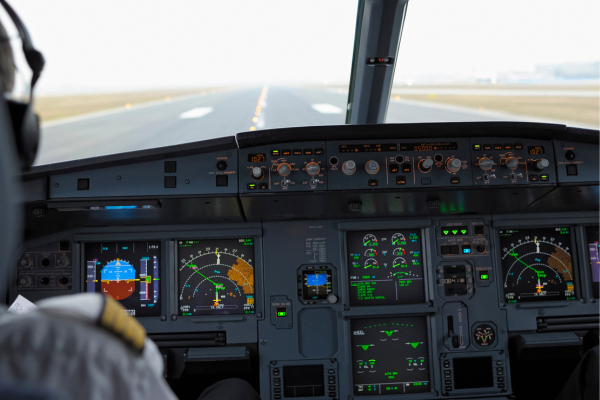
Among front line operational professionals of all kinds, there are those who have a special interest in how to improve performance. Some of these professionals spend much time studying the various disciplines involved – human factors, psychology, complexity science, systems engineering, and so on. I have spoken to many in aviation, shipping, healthcare, emergency services, and other sectors. Some can be found in the back issues of HindSight magazine. One person I have spoken to many times over the years is James Burnell, a Scottish airline captain, union rep, and student of complexity and system performance. I met James to talk about some of his perspectives on People in Control: Staying in the Loop. In his Edinburgh home, close to his base airport, we discussed theory and practice with implications for professionals and organisations.
Journey to Captaincy
Aviation infused James’ childhood. Growing up in Scotland, his father was an airline pilot with British Airways, in the Highland and Islands division. Initially attracted to aerospace engineering, James started a degree at Glasgow University, but he got the chance to fly during that time, and his passion for flying was ignited.
While looking for work as a pilot, James worked for various airlines writing operations manuals. But he realised that he was drawn more to the practical aspect of flying than office-based work. “I enjoyed the problem solving – the novel solution generation – more than routine and rigid structures.” He started flying as first officer (FO) in the late 1990s on Shorts 360s and SAAB 340 in the Scottish Highlands and Islands, and later in Scotland. He has fond memories: “It is probably the nicest job in flying, because you get to see this incredible scenery. My first sector on the Shorts 360 was a mail run from Glasgow to Stornaway. We took off at about five in the morning, with the sun coming up in the East as we headed out over Loch Lomond and across the hills. And I just thought…’I’ve made it. This is tremendous.’”
The financial rewards were better elsewhere, though, and James moved on to bigger airlines. This was more controlled, but still with “a nice amount of problem solving…you actually get to fly a plane”. He eventually got seniority and ended up in Edinburgh, and earned a command rating on the Embraer 145 in 2005. With just a handful of routes, mostly within the UK, the number and timing of sectors were quite different to what he and other pilots experience today.
The next transition was to a new airline with direct entry command, and to the Airbus. To become comfortable with this aircraft took more than a year, which was longer than previous aircraft types due to the very different operating philosophy. From initially flying just UK-based routes, more routes were added over the years “and it became more and more punishing from there”, he noted, hinting at the challenges of flying now compared to 20 years ago.
The Possibility Space and Patterns
This variety of operational experience leads us to the topic of variety more generally in operations. There are interesting differences between bases in terms of size and culture that affect operations and approaches to safety. Some bases are very procedurally focused, while others are more adaptive. James has observed that in smaller regional bases, first officers have a lot of responses to various situations. “They can hand fly. They can use the manual thrust. They have lots of different ways of controlling the aircraft.” At the larger bases, things are much more rigid. “They stick to the standard operating procedures because they don’t get that freedom to try things.” Exploring the reasons for this, James said that the captains and the first officers would rarely meet each other more than once a year in the large bases. “They don’t get that comfort with each other to try to explore the possibility space.”
The concept of the ‘possibility space’ and the related concept of ‘patterns’ shaped the next part of our conversation. James’ thoughts about people in control and staying in the loop are surprisingly theoretical for a captain interested in practical problem solving. This is because James has been keeping up with theory in safety and complexity theory over the years, and applying that within the British Airline Pilots’ Association (BALPA), in his role as a safety representative.
The possibility space is just that – the possibilities that exist in a given situation. This depends on all sorts of things, and the many contexts and constraints – regulatory, procedural, technological, organisational, temporal, environmental – and the expertise and networks available. Patterns, meanwhile, exist both in our environments as ‘stable- enough states of the world’ that our mind and bodies are aware of (not necessarily consciously), and within our minds and bodies as corresponding triggered patterns, which have previously developed during similar experiences. These patterned responses are rarely consciously available to us in the form of logical thought, although our minds make us think so after the fact. Patterns, James argues, are the basis for most operational decision-making. Existing patterns can be combined with logical thought to explore different possibilities, generating novel ways of responding to very contextually-specific problems.
In the decision-making literature, this relates both to ‘recognition-primed decision-making’, popularised by Gary Klein in his research and book Sources of Power – How People Make Decisions and the predictive processing models of human cognition developed by Karl Friston, Andy Clark and Anil Seth. “Most decisions involve tacit pattern-based recognition from actually doing the job or other outside experiences,” said James. “A lot of it is autonomic,” not conscious or thought-through. “In very complex situations, especially crisis situations, you need a very quick response. And that’s what these patterns do. They give you a heuristic or a rule of thumb on how to act.” Patterns mean that we don’t have to waste energy on working out solutions from first principles which would very quickly generate information overload.
An obvious heuristic for staying in control that all pilots know is ‘aviate, navigate, communicate’. “When you’ve stabilised the situation enough, you can start making more sense of what’s going on.” There can be even simpler if-then rules, James noted: “if something bad happens in the cockpit, then turn the seatbelt sign on because it gets the cabin ready.”
Learning Patterns
An important way of learning patterns is by doing – by trying things in practice. Again, what is critical here, James said, is creating potentials and possibilities: “You need as many responses as things that happen.” Due to the increasingly complex nature of our system, things that go wrong are very likely to be unknowable or unimaginable in advance. This means that we cannot and should not specify everything people need to know in advance. Learning needs to be delivered by the exploration of the possibility space.
So, some of the focus needs to be on creating possibilities in advance of need. James gave the following example: “If you have a technical issue that precludes the use of the auto-thrust, which is a function of the aircraft that automatically controls speed, then having the ability to manually take on that function becomes vital. It may be that function interacts with another function you have learned and combining these further extends the possible responses that a pilot has to meet the demandsof any given situation.” This means generating potentials to meet needs that are unknown, unpredictable, even unimaginable. “You’re preparing for a need that you can’t possibly specify,” he said. “So, you have to continually generate potentials even though you may never use them.”
This highlights problems with very rigid training structures which encourage thinking of “the next right thing to do in a fixed sequence”, as if flying an aircraft was like operating a production line. “A lot of the new pilots come in thinking ‘this is so controlled that I can just follow the process every time’. That doesn’t work because context changes.” And all of this means that practice in the real world, with all its messiness and unpredictability, is essential. By avoiding practice in the real world, the risk shifts to being unprepared for surprises.
As mentioned earlier, learning by doing also means doing the basics. Regulators and airlines have recognised the need to practise visual approaches, auto-thrust off, and manual flying skills generally, but many airlines only allow this in the simulator. A question for many is whether simulation practice of, say, flying with a single engine with no auto-thrust, will translate to real life. Can you still do it manually in operations?

Leadership for Learning
In learning patterns, people need the authority, competency and confidence to be able to practise in ways that work for them. Those in leadership positions have a particular role here. “As an airline captain, I would say, ‘this is my intent, can you make that happen?’ And I would let that first officer make it happen as they saw fit.” Executing what James calls “generative learning process” of building potential responses to demands and conditions. The idea is that operational people make contextually appropriate decisions, but in the direction that’s coherent with more senior decisions. The same is true in a team and organisation more generally: “maintain coherence of direction and distribute sensemaking and decision-making down through the individual layers”.
James gave the example of an instrument landing system (ILS), where the aircraft would need to capture the glideslope at the right speed and the right height, or this would create problems. Heavy airliners have lots of energy, so getting the aircraft to slow down and go down can be a challenge, he noted. “I would make sure that the FO is in the loop, and I would watch to make sure that the aeroplane is always within my control should it start to deviate. But I wouldn’t necessarily take over if things started to go awry. I could throw in ideas, but they’re never going to become captains if I do everything for them.”
The emphasis, again, is on the need to explore the possibility space. James recalled situations where it’s been windy, and the aircraft has been upset on the approach. “The FO has tried to hand it to me to land: ‘I can’t do this, you take it.’ I say that if you don’t feel that you can land, you can go around. Of course, I can take it, and I can go around and I can land it, but they’re not going to learn anything by throwing their hands up and asking me to do it.” This approach provides an important learning opportunity combined with a confidence gain. “When they come out the other side from where they thought they couldn’t do it, wow, they’re a different person. ‘I can do this. I can learn, I can change.” James gave another example where police have come onboard to talk to passengers. “I wouldn’t necessarily get involved in that because the cabin manager is an experienced professional. They understand the situation and they’re dealing with the passengers already. I am, of course, there for support or direction, or the company line.” His point is that to be in control, people need to learn through experience of how to deal with the context that they’re in.
This approach to leadership and learning is not necessarily common, particularly outside of the aircraft. James observed that among ground staff there can be a lack of decision-making authority. This can result in almost farcical referral to superiors for decisions that should be taken by competent and experienced professionals in the situation. Processes and procedures can be a useful scaffold, he noted, but we all need space to adapt to cope with the complex, changing environment.

Learning From Others’ Experiences
Of course, not everything has to be learned first-hand. Aviation safety is built on generations of experience. This is communicated through patterns. In the social case, social scientists might call them ‘assemblages’. “Pilots have generations of knowledge in these patterns because so much processing of decision-making has been done before. Learning is a social process, and we can pass on these patterns for learning those.”
So, at the beginning of training, “you’re preloaded with enough patterns to get you started.” This continues throughout training. “When I’m sitting in a simulator and I have an experienced training captain talking to me and things haven’t gone quite as well as they could, the training captain may well come and say, ‘look, try this thing that we’ve seen from other people as it works well’.” Those training captains are in a unique position of having observed and listened to hundreds of other captains and are then able to transmit vital cultural knowledge.
Most pilots aren’t in that position, though. So, there is a need for airlines and other organisations to allow information flows. For pilots, crew rooms were always a key part of this learning. “Now a lot of the airlines have got rid of the crew rooms”, James said. “You just report straight to the aircraft. I notice a difference in how these patterns are passed on and the impact on the way people operate.” Many of his colleagues have said that the loss of crew rooms has affected their operational communication with other operational staff. For safety management professionals too, time sat in crew room can be the most valuable experience possible, I have experienced this in simulators, and just hanging out with controllers. This is where informal accounts of experiences can be heard. “There’s no high energy barrier, such as forms to fill in. You can say, ‘look, I did this, and this happened.’” That, for James, is ‘being in the loop’, and radically different to the decontextualised data of reporting systems.
There are a few other opportunities for informal, face to face, verbal exchanges between certain operational staff, and with safety staff. While cabin crew spend much time together, like consultants in a hospital, captains don’t necessarily meet each other often: “You never fly with another captain.” So how do you get those informational flows going? Interestingly, James has observed that captains can also learn from first officers who have picked up patterns from other captains. But he believes that captains especially have an unmet need to sit down in an informal setting to talk about experience and mistakes. This kind of conversation does not happen in the same way with first officers, James said, and if it does, “it’s heavily filtered”. From a company perspective, a lesson here is that people need opportunities to listen and pass on information to others about their experiences.
The Limits of Formal Safety Learning Systems
There are, of course, formalised means to share experience. And in aviation, it is tempting to think that all information should pass through these highly managed conduits. James noted that “I think one of the problems we face in the airline industry is that we are very focused on explicit information.” So, what’s the problem? Why can’t company and other industry reporting and learning systems meet this need, for example? One constraint is that legacy reporting systems – with their forms and taxonomies – necessarily restrict the type of information gathered. What can be inputted is predetermined based on capabilities and limitations of the technical systems involved, their designers, and feedback from experience. That restriction of information flow also restricts the ability of the organisation to respond. Codification and quantitative analysis of free text or interview data – while useful at scale to find trends – deconstruct narratives and removes meaning. Furthermore, there is always a lag in feedback to staff, which can be weeks, months or even years.
There are industry-wide voluntary reporting systems that allow for more free narrative and faster feedback. These include, for instance, the Confidential Human Factors Incident Reporting Programme (CHIRP) in the UK. A constraint here is what is chosen to be fed back, by whom, and how (see Waites and Burnell, 2023). It may be that frequently-reported issues are fed back while others are not. This is relevant, but “what you probably want to do is just get as many potentials as possible for people to consider”, James argued.
Practices that work well are sometimes turned into procedures. But this isn’t always possible or even desirable. This brings us to the difficulty of formalising or manualising patterns. “As soon as you write it down, you’ve almost corrupted it because you’ve fixed it independent of context. You’ve lost that ability for it to adapt and evolve.” James compares this with storytelling of fairytales through the generations in the oral tradition; the lessons for us are lost. “As soon as we wrote these stories down, we started to lose the context of why we were telling them.”
What Can Usefully Be Done?
So, what can usefully be done? Allowing human interactions to exist closer to the way that we evolved is a great start. Social networks have always transferred information in efficient ways to optimise community responsiveness.
An obvious starting point is not to remove crew rooms, or reintroduce them. Crew rooms are not wasted spaces, they can be valuable learning spaces for casual verbal exchanges. For people to discuss operational information, there has to be a low friction way to do so. Crew rooms are also an important space for low-key social support, akin to coffee rooms and water coolers. An organisational desire to systemise everything and reduce perceived ‘waste’ works against these important ideals.
Another idea is a buddy system. James proposed that new joiners to any base or first officers approaching command would get allocated a buddy or mentor whom they could speak to. The buddy would change from time to time. Via this approach, new joiners would get added to informal networks in the background and reduce the degrees of separation between operational groups. These informal networks provide the information flows needed to work around formal constraints. James noted that companies that did well during COVID managed to adapt and keep operating largely due to the quality of their informal networks. For doctors, informal networks emerged as WhatsApp groups, which also exist for pilots. These can provide a means to share dynamic information on developing situations and novel solutions.
Despite the limitations to documenting experience, there are ways to collect short narratives. James suggests documenting people’s accounts of how they work, and why they’re responding in particular ways. “Collect a hundred stories for inexperienced pilots to read on, say, go-arounds that didn’t go as expected. Then build patterns or understandings through these small narrative structures. ‘I did this, and this is what happened.’” Airlines, James said, do this for big incidents and can be very good at it, but not for ‘ordinary work’. He suggested a book of just a few lines on each topic, as many small stories on a topic are preferable to one long one. He also suggested to bias it towards failure rather than success. “Because you’re going to remember failure. People learn a lot more from failure.” Interestingly, many old fairy stories and folk tales concern failure. In learning from our own experience, our current patterns are only adjusted if we perceive them as wrong, the patterns didn’t ‘do the trick’ – they didn’t ‘satisfice’. In evolutionary terms it’s better to not fail than to optimise, so our brains seek ways to not fail.
Narratives can be examined via different methods for themes and patterns that show how groups of people see and use them in the world. Captured narratives can be assessed as optimal or not, allowing us to move them in a preferable direction or to be passed to other groups if they apply. “This is much more powerful than any compliance structures,” James argued, “and much more ethical.”
So where do regulators come into this? “My big thing is that there have to be generative structures at each different level”, said James. “So rather than improving the regulation to create the perfect organisation, we should improve the regulation to help generate organisations that evolve towards greater evolvability.” In other words, regulations should encourage continuous learning, staying contextually responsive and being prepared to be surprised (see Woods, 2023). This is very different to compliance or ‘best practice’, because not everything can be specified and there is no best practice in complex, volatile situations – only practice that is contextually appropriate. “So actually, the regulator has a huge part to play, but it’s not the part I think they’re necessarily playing at the moment.”
Moving Forward
This conversation with James has been one of many, but one that could be useful to reflect on. The discussion raised many questions worthy of reflection by professions and organisations. For instance:
- How can we foster a greater variety of responses to potential problems, even if those problems are currently unimaginable?
- How can we leverage informal networks to facilitate knowledge sharing and learning?
- How can we ensure that decision-making is contextually appropriate and adaptable to changing circumstances?
- What are the limitations of formal safety management systems and how can they be supplemented by more informal approaches?
- How does the increasing reliance on technology affect the development and maintenance of operational skills?
- What specific roles can leaders play in fostering a culture of learning and experimentation?
- How can regulators promote a more adaptive and learning- oriented approach to safety regulation?
- How does culture influence the way people approach problem- solving and learning?
James is integrating these ideas into his work with pilots via BALPA, using distributed sensemaking and decision-making, and gaining members’ stories to understand what pilots are thinking. James’ emphasis on adaptability, learning by doing, and narrative- driven learning challenges rigid, procedural adherence and overly formalised safety management systems. In aviation and beyond, he highlights the need to create environments where operational professionals can continuously learn, adapt, and evolve to meet the ever-changing demands of their roles. Despite the “punishing” nature of piloting for some today, he remains optimistic about the possibility space. “It is fascinating when you get into the ‘how and why’ of managing systems for safety. There’s a long way we can go, but there’s lots of stuff out there. I think very positively about where it could go.”
References
Klein, G. (2017). Sources of power: How people make decisions. MIT Press. https://doi.org/10.7551/mitpress/11307.001.0001
Waites, J., & Burnell, J. (2023, Summer). Epistemic injustice: The dog has now been removed from the tail. HindSight, 35, 18-20. EUROCONTROL. [pdf]
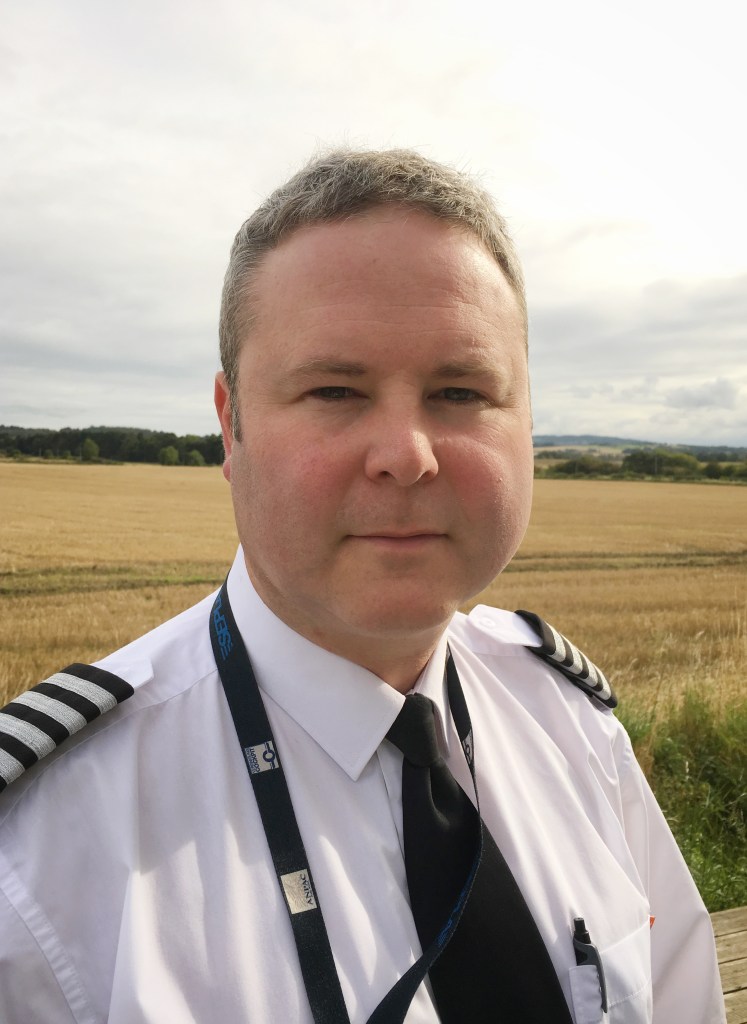
CAPTAIN JAMES BURNELL is a pilot and safety rep based in Edinburgh with the UK airline easyJet. He supports the British Airline Pilots’ Association in creating and promoting safety theory. James has a strong interest in generalist learning, cutting across many scientific fields with the aim of improving the safe management of humanistic systems.
This article is a reproduction of the an article published in HindSight magazine issue 36 in December 2024 (all issues available at SKYbrary)

 Humanistic Systems