
This post is an edited version of my invited talk at the IATA World Safety and Operations Conference in Istanbul, 8th of October 2026.
How would you explain to a neighbour why your organisation generally operates safely or well? It is a question I have often asked in workshops with chief executives, directors, air traffic controllers, pilots, engineers, safety specialists and others. The answers are interesting, partly because of how they differ. An engineer may give a different account from a pilot or air traffic controller. A training captain may emphasise something different from a chief executive. A safety manager may have yet another perspective. In other sectors, such as healthcare, there will be a wide variety of responses that are worth listening to and thinking about. Our professions shape what we notice, and what we overlook.
We spend much more time asking the reverse question. What are the risks? What could go wrong? What could hurt us? These are important questions, but they are not enough. We also need to understand why things usually go well, and how things go in general. If we do not understand what makes safe operations possible, how do we know what to protect when we make changes in the organisation? How do we know what not to cut under pressure? How do we know what to protect and defend under constraints?
Answers may include technology, procedures, training and competency, safety management, and oversight. These are all important. Their contributions depends on how they work together in actual situations, which tend to disappear from view when everything works out.
Same outcome, different experiences
A flight arrives safely and – more or less – on time. It happens tends of thousands of times a day. Something similar can be said in many industry sectors. From the outside, lots of outcomes look much the same. But those outcomes tell us little about what it took to achieve it, or what it felt like for those involved.
The people involved may have had ready access to information, or spent much of the day chasing it. They may have drawn on shared expertise and mutual support, or dealt with difficulties in relative isolation. They may have had opportunities to learn from colleagues, or moved from one demand to the next without time to reflect. They may finish feeling supported and connected, or depleted and disconnected.
In most cases, only the people doing the work will know the difference. The performance indicators may look exactly the same. Few others will have any idea about the personal and interpersonal experiences of those involved.
There will be a lot of hidden adaptation, and that has costs as well as benefits. People constantly make adjustments to changing circumstances. They also compensate for shortfalls in information, equipment, coordination and resources. That compensation does not necessarily come for free. When it becomes chronic, and the organisation relies on everybody stretching to make things work, we need to ask what is happening to both people and performance.
Human wellbeing and overall system performance are the twin aims of human factors and ergonomics (HF/E). I think they are also signs of good management and good design generally. Wellbeing includes physical and mental health, rest and recovery, meaning and purpose, connection and belonging, learning and growth, and a sense of agency and contribution. System performance includes safety, reliability, efficiency, quality of service, adaptability and environmental sustainability. Good decisions need to attend to both. In HF/E (and work and organisational psychology), they are inseparable, or at least they should be. We should design and manage for both. And if we don’t, both may be threatened. If people are overstretching or chronically compensating for shortcomings in design and management, their wellbeing may well suffer while the organisation also drifts to the edge of safe operations, perhaps quite invisibly.
We can turn aspects of these into indicators, but indicators remain proxies. Even measurements of work itself – work-as-measured – are proxies for the real thing. They cannot show us all the effort, including the compensatory effort, behind the outcome. A punctual departure or a successful operation cannot tell us whether the people involved had the conditions they needed, or whether they bore the cost of any shortfall themselves.
Getting closer to the work


One difficulty is that decisions about work often depend on many imagined versions of it. I work with many professions, but I am none of those. I can develop a better understanding through more and better contact and communication with people and their work, but I accept that my understanding remains incomplete and inaccurate in important ways. It’s important that I do accept that, and remain a perpetual apprentice.
If I asked you to describe an anaesthetist’s working day, you could probably offer an account. You may have seen television programmes. You may have been anaesthetised yourself (although hopefully you do not remember much of it and were not taking notes). You would draw on what you know and fill in the gaps. We all do this when we imagine other people’s work.
There are several accounts to consider. Work-as-imagined is what we think happens. Work-as-prescribed is what rules, procedures and instructions say should happen. Work-as-disclosed is what people say happens. Work-as-done is the actual activity. The first three are necessary for understanding and envisioning work (among others), but none gives us a complete account of the fourth.
Even those doing the work cannot fully describe it. Much of our expertise operates without conscious attention, and memory is selective. We may struggle to explain the small adjustments we make from moment to moment, especially since they seem so ordinary and unremarkable. Some of that knowledge passes between colleagues through stories, anecdotes, cautions and questions. And they cannot describe someone else’s experience of the same role, which may be quite different. This makes contact with the people doing the work essential, along with some humility about what we can know about another’s experience of work (even, or especially, if we have done the same job).
When we create changes in an organisation, we imagine what people do, what they need and how things will work afterwards. The problem is that some of the things we change have functions we never saw.
The importance of shared spaces: coffee areas and crew rooms
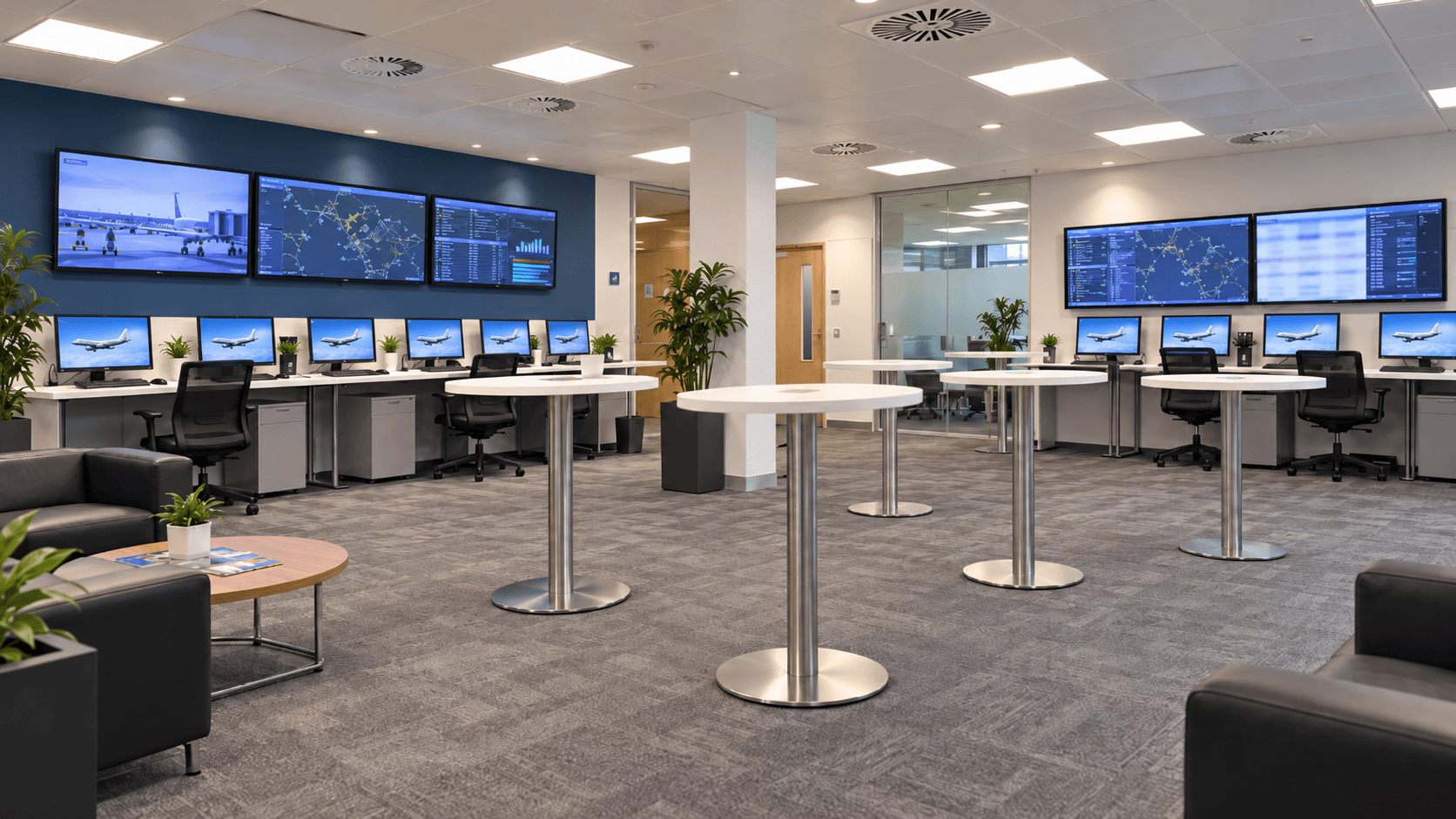

In one organisation I was working with over several years, air traffic controllers and engineers, the controllers raised a concern. Controllers no longer seemed to know what the engineers were doing in the same way as before. Information about planned maintenance was not reaching them as it once had, even though the formal notices had not changed. The relationship between the two groups was also different. We tried to understand why.
The organisation had moved to a new building. In the old building, controllers walked through the engineers’ coffee area on their way to the operations room. They would bump into engineers who would talk about engineering work. A controller would pick that up and pass it to colleagues. Nobody had to arrange a meeting.
In the new building, controllers entered and went straight to the ops room. Engineers took the lift upstairs. Their routes no longer crossed in the same way, and there was no shared area to bring them together.
The old route probably seemed strange and not intentionally designed. But the ‘bumping space’ happened to support much more than movement through a building. It created opportunities to become familiar with people in another role, understand their concerns and find out what was happening. Those encounters also made it easier to ask questions: “These new mice, they’re more sensitive than the old ones and have a scroll wheel which is too fast…” Just as importantly, the encounters helped to build bridging social capital, which made interaction smooth, responsive, and pleasant.
The building changed, and the opportunities for those conversations changed with it. What had looked like circulation space had also supported operational knowledge and working relationships. Without understanding that function, it was easy to remove it without providing anything in its place.
A similar question arises when crews report directly to the aircraft or gate instead of meeting in a crew room. There can be benefits to direct reporting, including less walking and less rushing between locations. The may be some benefits to crews as well as to the organisation. But we need to understand what the previous arrangement made possible.
A crew room provides a completely different setting from a passenger gate. It’s a psychological liminal space, a sort of buffer. There may be time to prepare together, get to know someone and move psychologically into the working day. There may also be opportunities sense or to ask how a colleague is doing before everyone puts on their professional faces. Then there is the shared walk to the gate, where the crew is walking side by side, an arrangement which provides another useful context for discussion. These things depend on the room, the time available and the culture. The room alone does not guarantee them, but it affords a number of things that the gate does not.
The issue extends beyond the crew assigned to a particular flight. How often do captains meet other captains to exchange experience? Where can someone hear about a situation they have not encountered themselves? Where do people learn whom to approach when they need help? Chance encounters can support exchanges that are unlikely to find their way into a formal report, training package, or notification (to say nothing of the effectiveness of these means of communication).
If people arrive individually, meet at the aircraft and leave separately, the briefing will still happen. But where do the other conversations happen?
This is a question about the functions we need to preserve when arrangements change, and how we can understand those functions. For instance, how can we retain the benefits of direct reporting while protecting opportunities for contact, support and learning? Answering that means spending time in the spaces with the people affected, and listening to them, including those who welcome the change and those who experience losses that have not yet been seen and acknowledged, let alone compensated. Since people are not always able to articulate the benefits of something they are accustomed to, we may need someone from the outside – equipped with a particular set of skills – to see the extraordinary behind the ordinary.
Organisations and Organising


We often picture organisations through their symbols, such as organisational charts and their associated divisions, departments, units, reporting lines, and so on. If we mapped the dynamics of information and support, we would see something much more interconnected. We would also notice people whose contribution is not even represented by their position on the chart.
Most of us know someone who seems to know everybody. They know whom to ask, can put two people in touch, and take pleasure in making those connections. These “connectors” are vital to organisational and community life. Yet we may give this ability little recognition, even while depending on it to get things done. Leadership depends on connectorship, but this is rarely acknowledged.
We cannot prescribe every useful conversation or design every relationship, nor would we want to. But we can pay attention to the conditions that make helpful conversations and relationships more or less likely. We can ask what happens in shared spaces, what people gain from informal gatherings, and what fades when working arrangements change. We can also make room for people to organise things themselves.
There is a difference between change done to people, for people, with people and by people. A change made for someone may be well intended and still fail to meet their needs. Working with those affected gives them influence and gives the people designing the change access to knowledge they would otherwise miss. Sometimes, the starting question might be: what can people do by themselves, for themselves, and what support would make that possible? This isn’t always possible, but – as a minimum – we should be in the with mode of change, where organisational changes are made with those affected, working together as partners.
Leadership decisions and work conditions
Leadership decisions shape the conditions of work in important ways that may not be imagined or seen. Staffing and schedules affect capacity, fatigue and recovery. Technology and procedures affect attention, workload and effort. Space and organisational arrangements influence contact, coordination and learning. Roles and authority shape autonomy and the ability to respond or escalate. Targets, and responses when targets are missed, influence priorities and what people feel able to disclose.
These effects need to be understood together. A decision to move to open plan office space may seem like a way to encourage collaboration (and save money), but in reality it may increase stress from noise (with near constant active video calls), movement and interruptions. Some employees, will be especially disadvantaged, such as those with sensory sensitivities and those who need quiet space in order to focus. A new reporting arrangement may seem to make sense from the point of view of a budget or org chart, but may detach people from their day-to-day informational and support network, affecting whether anyone notices that a colleague is struggling. The question is, were they even asked about the changes? Were the people and their relationships even seen?
So when we evaluate a change, we need to ask more than whether it delivered the expected saving or improvement on paper. Are the intended benefits visible in everyday work, and experienced by those doing it? What has changed in effort, coordination and recovery? Have contact, learning and support been preserved? Who benefits, and who carries new burdens? What would cause us to review or redesign the change, perhaps even admitting that we got it wrong, and need to adjust? Mistakes happen in the moment to moment of operational decision making, and in the longer time frame of organisational decision making. If we want to encourage people to be honest about their mistakes in operating, we must be at least as honest about our mistakes in managing and designing. Not to do so is both hypocritical and counterproductive. There is a saying that culture starts from the top. It is nothing like as simple as that, but one this is sure: everyone is watching.
We must be willing, curious, and grateful, to discover that our imagination was incomplete, that something needs to change again, and perhaps this time differently. This is learning, and it is a human activity. It’s down to each of us. Organisations don’t learn: people do.
Seeing the whole person
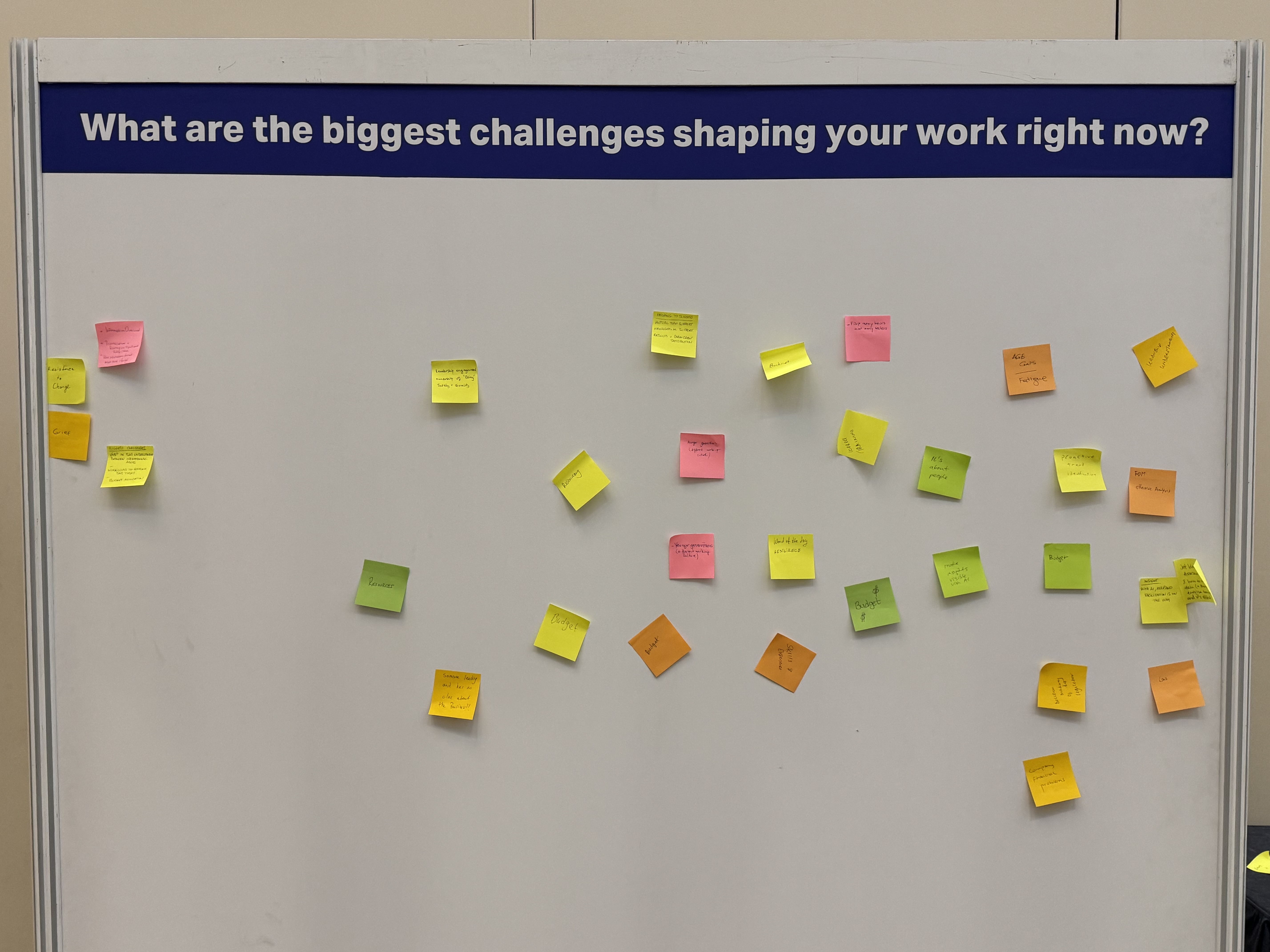
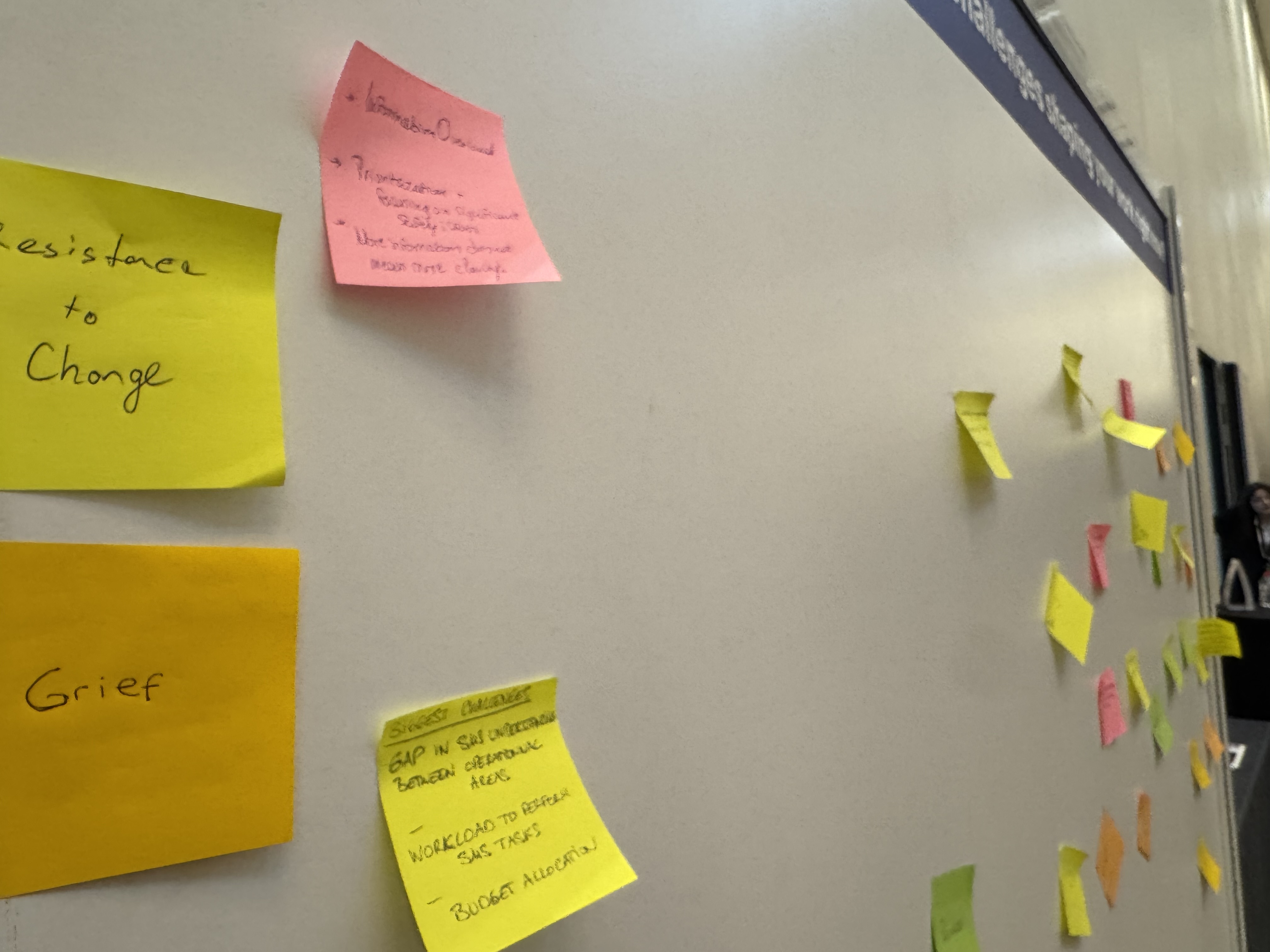
Outside the conference room in Istanbul, a board invited people to write their biggest current challenges on sticky notes. There were all sorts of concerns, about change, workload, budget and resources, for instance. One note touched me. It contained a single word: “Grief”. At the time of speaking, and writing, I am in grief myself, having lost a loved on. Many people are: millions, around the world, right now. That sticky note was in my mind at the start of the talk, and I returned to it towards the end of my talk. I did not know who had written it or what had happened in their life. But there it was, on a board at an aviation safety and operations conference, alongside the usual organisational and operational concerns. Showing distress or expressing vulnerability is an emotional taboo in workplaces. Anyone who has known grief well, will know how others sometimes react to grief in ways that we don’t expect. (People will sometimes actively avoid someone whom they know is bereaved.) Someone felt the need to express the inexpressible, through a sticky note. This was seen, even if the person couldn’t be seen directly.
We are whole and complex beings. But we are not always seen as such. Every pilot, controller, engineer, cabin crew member and manager has a rich and complex personal life. Every nurse, surgeon, anaesthetist and theatre manager. These lives do not remain at home. People bring to work their hopes and fears, gifts and needs, and joys and turmoils. They may not be visible to others. But they are there in the person. We are not units of production. Supporting people means caring about their experience beyond the work-as-measured that may contribute to a performance indicator.
It also requires interest in the work as it is done, in a context that keeps changing. No two approaches to the same runway are exactly alike. No two operations are the same. The person, the work and the circumstances vary, moment by moment, day by day, season by season, and that variation is part of what people manage.
Based on my observations over the nearly 30 years of my career, I believe that one of the best ways to support safe performance is for people to feel cared for, and for people to have the opportunity to express care. That belief has practical implications for the conditions we provide and the way we involve people in decisions affecting them. It is not enough to care about safety in some abstract sense. Wellbeing deserves attention in its own right, alongside the contribution it makes to operational effectiveness. It’s down to us: Systems don’t care, but we can.
In summary, we must try to: see the person, the work and the context; support performance and wellbeing together; and, create change by and with people, not for or to them. And we must ask ourselves: what are we strengthening, or gradually eroding, in the people and relationships on which safe operations depend?
How to Cite
Shorrock, S. (Oct 9, 2026) Supporting the people who make safe operations possible. Humanistic Systems. https://humanisticsystems.com/2026/10/09/supporting-the-people-who-make-safe-operations-possible/

Discover more from Humanistic Systems
Subscribe to get the latest posts sent to your email.
