Search

Humanistic Systems

Understanding and Improving Work & Life

Menu
Skip to content
  • Home
  • Collections: Albums & EPs
  • Top 40 Posts
  • Book: HF/E in Practice
  • Publications & Products
  • Talks & Events
  • About

Category: safety

  • Human Factors/Ergonomics

Paramedics Under Pressure: A Case Study for Systems Thinking

  • by Steven Shorrock
  • Posted on 13/12/201410/12/2024

Learning systems thinking is best done by doing. Case studies are useful ways to understand…

Read More
  • Human Factors/Ergonomics

‘Human Error’: Still Undefined After All These Years

  • by Steven Shorrock
  • Posted on 02/12/201410/03/2023

Despite the pervasive and controversial nature of the notion of ‘human error’ in academia, industry…

Read More
  • Culture

What I Learned From Velocity Barcelona 2014: Reflections on Human Factors, Safety and Webops

  • by Steven Shorrock
  • Posted on 22/11/201428/02/2023

I went to Velocity EU 2014 in Barcelona this week – the conference for web operations/WebOps…

Read More
  • Human Factors/Ergonomics

Life After ‘Human Error’ – Velocity Europe 2014

  • by Steven Shorrock
  • Posted on 19/11/201410/03/2023

This is a keynote address from Velocity Europe 2014 in Barcelona on 17 November. I…

Read More
  • Human Factors/Ergonomics

Occupational Overuse Syndrome – Human Error Variant (OOS-HEV)

  • by Steven Shorrock
  • Posted on 13/11/201410/03/2023

Occupational Overuse Syndrome – Human Error Variant (OOS-HEV) is a condition involving the overuse of the…

Read More
  • safety

The Safety-fication of Everything

  • by Steven Shorrock
  • Posted on 05/11/201417/03/2023

Some time ago, I noticed the safety-fication of everything. I noticed that otherwise fairly ordinary words…

Read More
  • safety

What Are You Reading For?

  • by Steven Shorrock
  • Posted on 12/10/201417/03/2023

The comedian Bill Hicks died just over 20 years ago. He was not ‘just a comedian’.…

Read More
  • safety

If It Weren’t for the People…

  • by Steven Shorrock
  • Posted on 04/10/201424/03/2023

In Kurt Vonnegut’s dystopian novel ‘Player Piano’, automation has replaced most human labour. Anything that…

Read More
  • safety

SAFETY is our Primary Goal!

  • by Steven Shorrock
  • Posted on 02/10/201419/03/2023

OVER BLACK WE HEAR THE DULL SOUNDS OF INDUSTRY; A MUFFLED MASS OF MACHINES, GEARS, STEAM.…
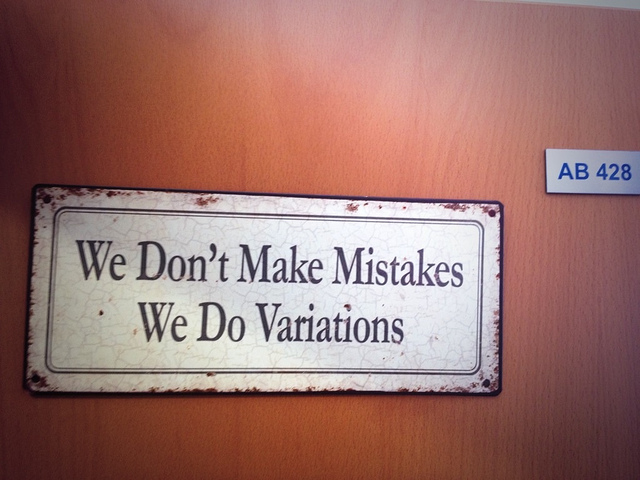
Read More
  • safety

Safety-II and Just Culture: Where Now?

  • by Steven Shorrock
  • Posted on 30/09/201424/05/2024

When things go wrong, we seem to display a reliable tendency to do one thing:…

Read More

Posts pagination

Previous Page Page 1 … Page 9 Page 10 Page 11 … Page 13 Next Page

Support Humanistic Systems

Humanistic Systems has been a free blog since 2012. The content is based on many thousands of hours of work. If you find the work personally valuable, and would like to support the site, please consider a contribution to running costs.

£10.00

One-Time
Monthly
Yearly

Humanistic Systems has been a free blog since 2012. The content is based on many thousands of hours of work. If you find the work personally valuable, and would like to support the site, please consider a contribution to running costs.

Make a monthly donation

Make a yearly donation

Choose an amount

£5.00
£10.00
£50.00
£5.00
£15.00
£100.00
£5.00
£15.00
£100.00

Or enter a custom amount

£

Your contribution is appreciated. Thank you.

Your contribution is appreciated.

Your contribution is appreciated.

Donate
Donate monthly
Donate yearly

About the Author

Steven Shorrock is an interdisciplinary humanistic, systems and design practitioner interested in understanding and improving work and life.

Chartered Psychologist (CPsychol) | Chartered Ergonomist and Human Factors Specialist (CErgHF) | BSc (Hons) MSc (Eng) PhD

Join 5,127 other subscribers
Follow @stevenshorrock
Follow Humanistic Systems on WordPress.com

Categories

  • safety (122)
  • Human Factors/Ergonomics (95)
  • Systems Thinking (84)
  • Culture (30)
  • Humanistic Psychology (21)

Tags

  • safety (75)
  • human factors (64)
  • Systems Thinking (59)
  • safety-II (51)
  • work-as-done (51)

Year

  • 2026 (139)
  • 2025 (30)
  • 2024 (36)
  • 2023 (107)
  • 2022 (52)

Human Factors & Ergonomics in Practice

'Human Factors & Ergonomics in Practice' concerns the real practice of human factors and ergonomics (HF/E), conveying the perspectives and experiences of practitioners and other stakeholders in a variety of industrial sectors, organisational settings and working contexts. Buy direct from Routledge.

Tags

ABCD accidents album1 album2 album3 album4 album5 album6 album7 album8 album9 album10 album11 album12 art ATC aviation blame change communication community competency context culture decision making deformation professionelle design empathy ep4 ergonomics expertise fatigue featured healthcare human error human factors Humanistic psychology human performance just culture justice language learning local rationality management mental health methods multiple perspectives normal work organisational culture organisations practice profession professionalism psychology research safety safety-I safety-II safety culture safety management systems safety Systems Thinking targets teams teamwork technology theatre training wellbeing work work-as-disclosed work-as-done work-as-imagined work-as-judged work-as-prescribed

Top Posts

  • I Crash: Texts from M.E.
  • Reflections on the Autistic Spectrum: A Critical Response to Uta Frith's Views
  • The Varieties of Human Work
  • Proxies for Work-as-Done: 1. Work-as-Imagined
  • Four Kinds of Thinking: 2. Systems Thinking
  • Twelve Properties of Effective Classification Schemes
  • Four Kinds Of Thinking: 1. Humanistic Thinking
  • Systems Thinking for Safety: Ten Principles (A White Paper)
  • Why Is It Just So Difficult? Barriers to ‘Just Culture’ in the Real World
  • Human Factors and Ergonomics: Looking Back to Look Forward

Archives

    Work-as-done is the work that people actually do, cognitive, verbal and manually. Work-as-judged is the judgement, evaluation or appraisal of work, via other proxies for work-as-done. Work-as-simulated is the work that is imitated or recreated in some way for the purposes of learning, testing, design, research, assessment, or exploration. Work-as-instructed is the explanation and demonstration describing how work is to be conducted or performed; the work that people are taught to do. Work-as-analysed is the process and product of examination, decomposition, categorisation, modelling and representation of work. Work-as-measured is the quantification of aspects of work: the work that is represented through numbers, metrics, indicators, scores, targets, dashboards, and other forms of quantification. Work-as-observed is the observation of the work of others, formally or informally - directly, remotely, live, or recorded - and the interpretation of what is observed by the observer. Work-as-disclosed is the work that people say that they (or others) do or did, either in formal or informal accounts. Work-as-prescribed is the formalisation, specification and design of work. It is the work that people ‘should do’, especially according to policies, procedures, rules, and so on.

    Contact

    contact [at] humanisticsystems [dot] com

    Follow

    • X
    • LinkedIn

    Blog Stats

    • 586,091 hits
    Blog at WordPress.com.
    ×

    Loading Comments...