This third post explores another perspective on ‘human factors’: Factors Affecting Humans.


This third post explores another perspective on ‘human factors’: Factors Affecting Humans.

This second post in a series on Four Kinds of ‘Human Factors’ explores another kind of human factors: Factors of Humans.

This is the first of a short blog post series, on four kinds of ‘Human Factors’: ‘The Human Factor.
It has variously been described as “an incredible and almost unbelievable gaffe” (Radio Times), “the greatest mistake in Academy Awards history” (Telegraph), “an extraordinary blunder…an unprecedented error” (ITV News), “the most spectacular blunder in the history of the starry ceremony” and “the most awkward, embarrassing Oscar moment of all time: an extraordinary failure” (Guardian). It was, of course, the Grand Finale of the Oscars 2017.
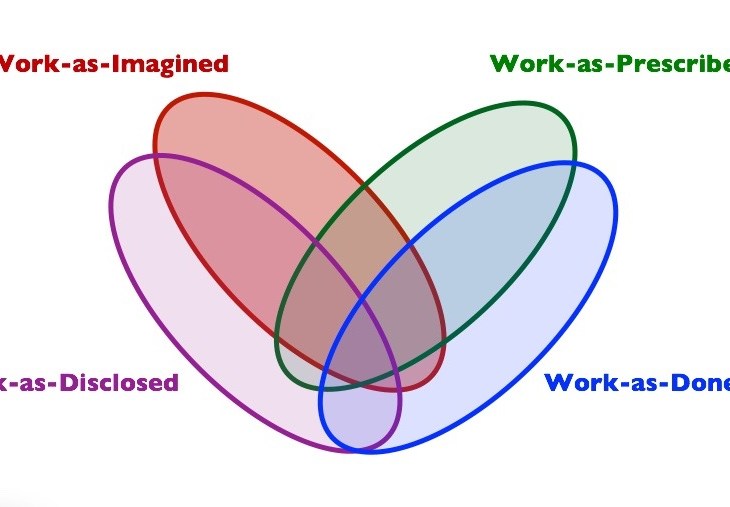
The analysis of work cannot be limited to work as prescribed in procedures etc (le travail prescrit), nor to the observation of work actually done (le travail réalisé). Similarly, it cannot be limited to work as we imagine it, nor work as people talk about it. Only by considering all four of these varieties of human work can we hope to understand what’s going on.
Nuclear Family is a gripping piece of interactive theatre which follows Joe and Ellen, nuclear…

Written and directed by Matthew Wilkinson. A thrilling modern tragedy about a Russian architect driven…

There have been many debates in human factors about its status as science or art…

There has been much talk in recent years about ‘never events’ and ‘zero harm’, similar to talk in the safety community about ‘zero accidents’. It sounds obvious: no one would want an accident. And we all wish that serious harm would not result from accidents. But as expressed and implemented top-down, never/zero is problematic for many reasons. In this post, I shall outline just a few, as I see them.
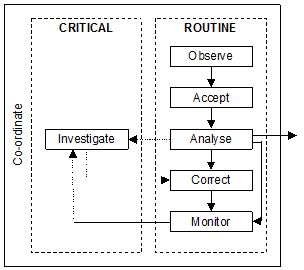
Me, myself and TMI Imagine you are an operator in a nuclear power control room.…
 Humanistic Systems