
Image: Steven Shorrock (2026) CC BY-NC-ND 4.0
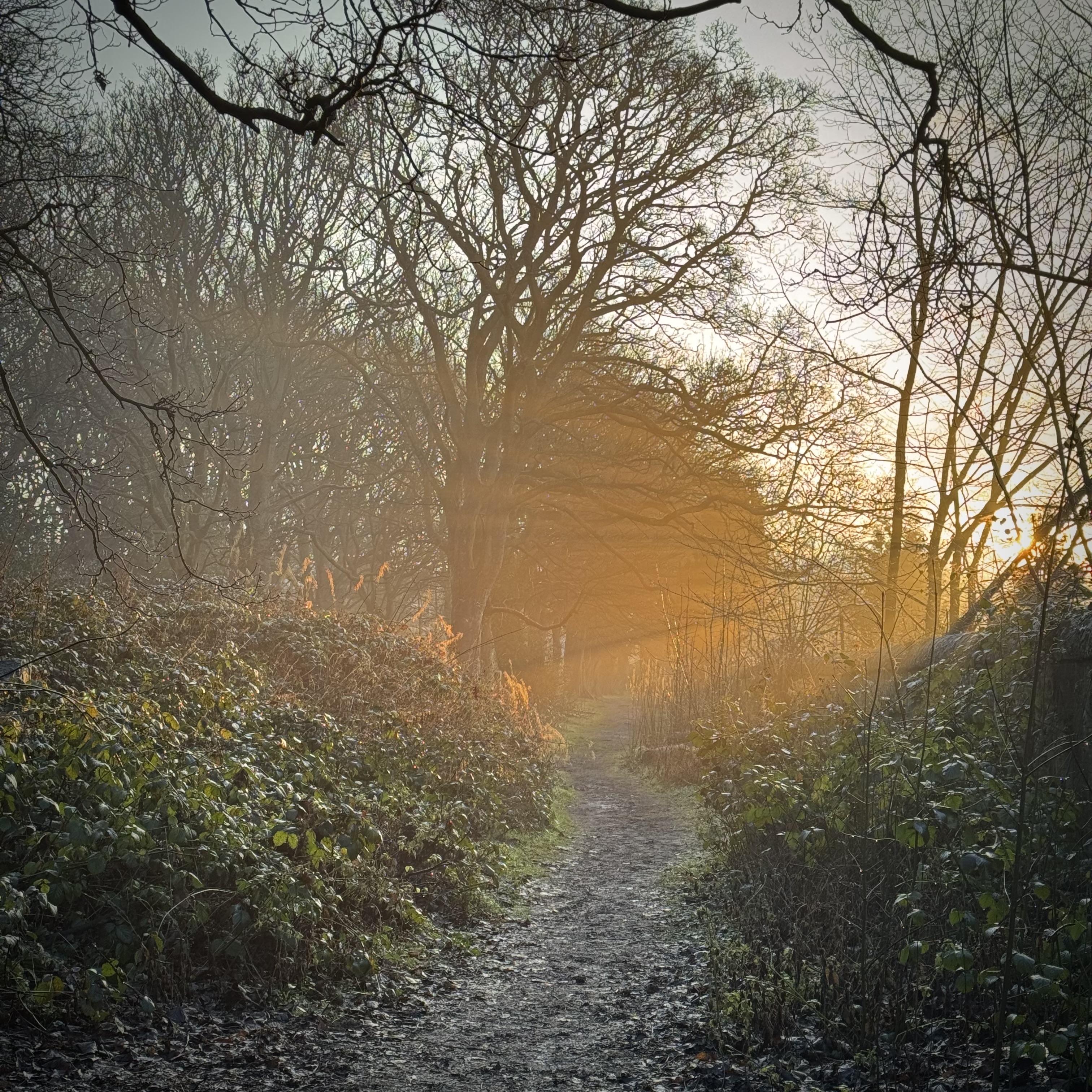
They live among you. They appear in the ordinary, everyday world, then disappear, and move through another world that few experience, and that is unlike anything most people could imagine. In these worlds, they are invisible.
Who are they? They are people who live with chronic conditions and dynamic disabilities. They are also the supernatural entities in a parallel dimension in Celtic folklore. In this post and series, I will connect the two, drawing from Irish, Welsh, and Scottish folklore, with a nod to some of my own ancestry in each of those lands, and reflecting on my own experiences and observations.
NHS England describe chronic or long term conditions1 as “those that cannot, at present, be cured, but people living with these conditions can be supported to maintain a good quality of life”. Chronic conditions may last from a few months to a lifetime. Dynamic disability2 is where “symptoms, functional abilities and needs change over time”. Fluctuations in frequency and severity of symptoms and limitations change over days, months, and years. Chronic conditions can also involve dynamic disability include neuroimmune, autonomic, autoimmune, neurological, connective tissue, neurodevelopmental, and mental health conditions.
Those with chronic conditions and dynamic disability often find themselves in a world that is both invisible and incomprehensible to everyone else. It is a sort of parallel universe where values, understandings, perspectives, and everyday concerns are not the same. This is the Otherworld of chronic conditions and disability.
Celtic folklore offers an older, companion language that may help to understand living with chronic conditions and dynamic disability. It speaks explicitly of invisible worlds where forces, inhabitants and travellers move according to different rules of time, energy and space. Folklore describes parallel realities, thresholds, and seasonal or cyclical energy. People and entities move between worlds where social laws or conventions are not the same. Forms of power and vulnerability also differ. Concepts and vocabulary from folklore have been lost from much everyday language, and differs markedly from institutional and professionalised language such as that of medicine and psychology.
I am writing this because I have lived with chronic conditions and dynamic disabilities for many years. The one that prompted me to think about this is the most recently diagnosed: Long Covid with a pattern of symptoms meeting the clinical criteria for myalgic encephalomyelitis/chronic fatigue syndrome (ME/CFS)3. This is a complex, multisystem condition that presents at various levels (from mild to very severe), which can fluctuate over many years. Another is autism spectrum condition4. This is a neurodevelopmental condition, and also varies in terms of levels (1-3) and spectrum characteristics. I’ve also previously experienced, and recovered from, chronic and complex post-traumatic stress disorder (PTSD)5. These and other long term conditions can have a substantial adverse effect on one’s ability to carry out normal, day-to-day activities, and hence be classed as disabilities.
In my case, at least, these conditions are invisible and incomprehensible to most. Only those I live with or know very well, and those with the same or similar chronic conditions, have enough insight to understand (and sometimes predict) how functioning and needs can be affected by certain environments and activities. People with these and other conditions, especially those that are invisible and fluctuating, report how they feel unseen6 and not understood, provoking greater prejudice7.
In this series, what I want to offer to those with chronic conditions and dynamic disabilities, and their loved ones, carers, friends, colleagues and community members, is a parallel frame for seeing and understanding via an exploration of the Celtic Otherworld. I will describe what I have come to understand as seven realities, and for each a short description of two archetypes from Celtic folklore. The entities and environments are ways to understand and articulate rhythms, constraints, thresholds, and ways of being that may be invisible to others. They may be helpful in understanding worlds we didn’t choose to inhabit, but do need to navigate.
This series of posts will be structured as follows:
- Invisible worlds: Celtic folklore for living with chronic conditions and dynamic disability (this post)
- The reality of fluctuation and unpredictability: Aos Sí and Awen
- The reality of calculating exposure and energy: Geis and Tynged
- The reality of invisible burden: Cailleach and Brân the Blessed
- The reality of masking and social translation: coming soon
- The reality of uncertainty and misleading signs: coming soon
- The reality of curtailed identity: coming soon
- The reality of living between worlds: coming soon
- Returning from the Otherworld: coming soon
When thinking about chronic conditions and dynamic disability in the context of folklore and mythology, it is important to avoid romanticising them. Having lived with such conditions, there is absolutely nothing romantic about them. Rather, I want to offer a companion vocabulary and set of images for experiences that I have found difficult to explain in ordinary language to those who do not share them. Folklore has a language that is not professionalised or institutionalised, but was once part of everyday conversation, and can still convey meanings that we struggle with.
References
- NHS England. (2014). Enhancing the quality of life for people living with long term conditions. https://www.england.nhs.uk/wp-content/uploads/2014/09/ltc-infographic.pdf
- The Sunflower Society. (2026, March 23). What is a dynamic disability? https://thesunflowersociety.org/what-is-a-dynamic-disability/
- Shorrock, S. (2026, May 17). I crash: Texts from M.E. Humanistic Systems. https://humanisticsystems.com/2026/05/17/i-crash-texts-from-m-e/
- Shorrock, S. (2026, March 13). Reflections on the autistic spectrum: A critical response to Uta Frith’s views. Humanistic Systems. https://humanisticsystems.com/2026/03/13/reflections-on-the-autistic-spectrum-a-critical-response-to-uta-friths-views/
- Shorrock, S. (2020, January 31). PTS(D) and me. Humanistic Systems. https://humanisticsystems.com/2020/01/31/ptsd-and-me/
- Hoppe, S. (2010). Visibility and invisibility in chronic illness. Medische antropologie. 22(3), 361-373. https://dare.uva.nl/id/584a216f-47ae-4618-86cc-07b9bae7a9d8
- Granjon, M., Pillaud, N., Popa-Roch, M., Aubé, B., & Rohmer, O. (2025). Attitudes towards invisible disabilities: Evidence from behavioral tendencies. Current research in behavioral sciences, 8, 100164. https://doi.org/10.1016/j.crbeha.2024.100164
How to cite
Shorrock, S. (2026, 30 May). Invisible worlds: Celtic folklore for living with chronic conditions and dynamic disability. Humanistic Systems. https://humanisticsystems.com/2026/05/30/invisible-worlds-celtic-folklore-for-living-with-chronic-conditions-and-dynamic-disability/
Footnote
This series has been partly inspired by the work of Blindboy Boatclub and The Blindboy Podcast. His writing and podcasting on Irish folklore, autism, mental health, and the world have been a frequent companion while living with chronic conditions, and have given forms of insight and meaning that professional language has often not. Go raibh míle maith agat!
One last thing…
My brother Gary Shorrock is taking on one of Britain’s most demanding endurance challenges: the Bob Graham Round52 in the Lake District on 27 June 2026. The funds raised through this challenge will go to ME Research UK53, a charity that commissions and funds high-quality biomedical research into the causes, consequences, and treatment of ME/CFS.
Gary must cover around 66 miles, summit 42 fells, and climb more than 8,200 metres – approximately 26,900 feet of ascent – all within 24 hours. That means steep, rocky, boggy terrain, long hours on the move, and likely sections in darkness and harsh weather. The Bob Graham Round is an exceptional test of endurance, preparation, judgement, and determination. Only around 3,000 people have ever achieved it.
Gary has previously undertaken major endurance events and fundraising challenges, raising over £20,000 for a children’s hospital charity54. Support for this fundraiser will help contribute to urgently needed research into ME/CFS – a devastating and neglected illness. Any donation would be greatly appreciated, and sharing the page would also make a big difference. Please see:
https://www.justgiving.com/page/gary-shorrock, or
Thank you for getting this far, and thank you for your support.
Steven and Gary Shorrock
Discover more from Humanistic Systems
Subscribe to get the latest posts sent to your email.
