HindSight Issue 28 is now available in print and online at SKYbrary and on the EUROCONTROL website. You can download the full issue, and individual articles. HindSight magazine is free and published twice a year, reaching tens of thousands of readers in aviation and other sectors worldwide.
Category: Systems Thinking
Learning Teams, Learning from Communities
In this article, I refer to some of the ideas and writings of asset-based community development to reflect on Learning Teams in health and safety, and small group conversations and action more generally in organisations. I highlight four lessons from ABCD for learning teams and host organisations.
Two or three years ago, I undertook a course involving UX ‘certification’. I had already…
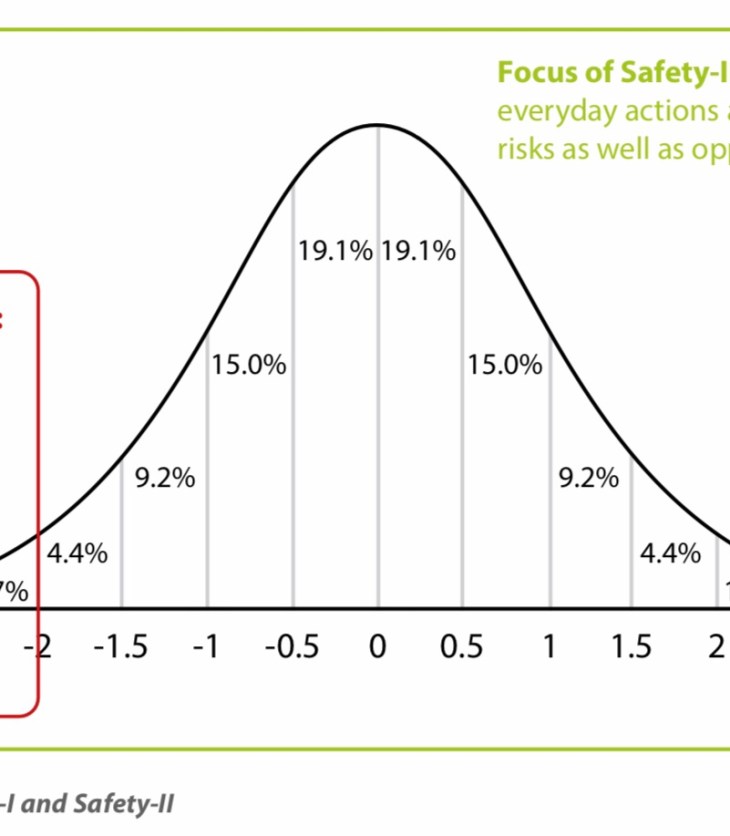
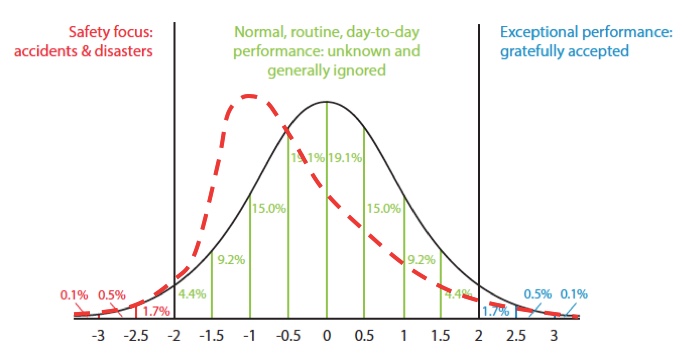
Safety-II has become a talking point. It is discussed not only among safety professionals, but – perhaps more importantly – among front line practitioners, managers, board members and regulators in a wide array of industries. But what is the real focus of Safety-II?
In this sporadic series of posts, I share a few insights, as they might apply to work and organisations, from ‘Life and How To Survive It’ and ‘Families and How to Survive Them’, by psychotherapist (late) Robin Skynner and comedian John Cleese.
In this sporadic series of posts, Icshare a few insights, as they might apply to work and organisations, from ‘Life and How To Survive It’ and ‘Families and How to Survive Them’, by psychotherapist (late) Robin Skynner and comedian John Cleese.
Most organisations seem to use a classification system (or taxonomy) of some sort, for instance for safety classification, and much time is spent developing and using such taxonomies. Importantly, decisions may be made on the basis of the taxonomy and associated database outputs (or it may be that much time is spent on development and use, but little happens as a result). There is therefore a risk of time and money spent unnecessarily, with associated opportunity costs. Still, taxonomies are a requirement in all sorts of areas, and several things should be kept in mind when designing and evaluating a taxonomy. This posts introduces twelve properties of effective classification systems.
A legendary rivalry: one mountain and two climbers seeking to be the best. We join…
In this post, I outline a typical process of 10 Steps by which problematic solutions come into being. Some of the steps may be skipped, but with the same outcome: a problematic solution.
On 26 April 2018, I presented at the ‘Philosophical Breakfast Club’ (@philosophicalBC) conference on High Performing Teams (#PBCHPT2018). It was a remarkable conference bringing together healthcare professionals, psychologists, sports scientists, athletes, managers, human factors/ergonomics specialists, military officers and specialists, and others, My first conversation while having tea before the conference was with a spinal surgeon and bomb disposal expert. Throughout the conference I had many other fascinating conversations with people from a diverse range of backgrounds.
This leads me to the focus of my talk: collaboration at the interfaces, and what happens between teams, groups, professions, layers of management, organisations…  In this post, I summarise the talk, slide by slide, with tweet-sized explanations.